New Delhi, March 3
The current escalation between the United States, Israel, and Iran underscores fundamental lessons about the intersection of military power, diplomacy, and strategic communication, a report cited on Tuesday.
"First, the use of coercive military force against a highly motivated adversary does not necessarily ensure compliance or quick surrender; instead, it may strengthen resistance and expand the scope of the conflict. Second, without credible and sustained diplomatic engagement, supported by enforceable security guarantees and mutual commitments, the negotiations are unlikely to succeed when overshadowed by threats of force. Third, regional conflicts are rarely confined in space or time, and they tend to spread across alliances, economic systems, and domestic political arenas," an article in Indian Narrative explained.
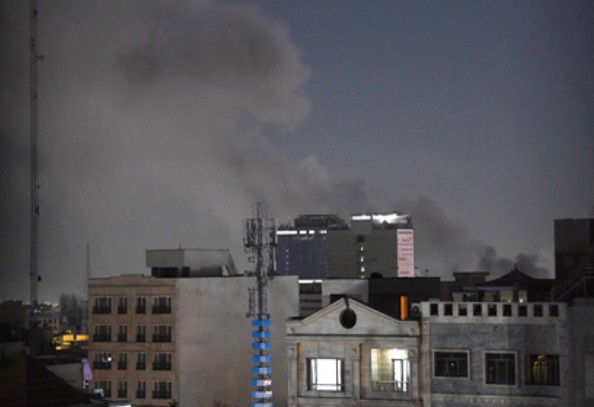
The direct military strikes of the US and Israel against Iran in February, wrote Professor Anu Sharma, can be one of the most consequential escalations in West Asia geopolitics. What distinguishes this episode, she opined, is not merely the scale of violence, but the convergence of long-standing structural tensions like nuclear proliferation, regional hegemony, deterrence and domestic political pressures that together transformed a protracted rivalry into active, kinetic confrontation.
"Before the strikes, the US–Iran relations had fluctuated between tentative diplomatic engagement over Tehran’s nuclear programme and periodic military brinksmanship. However, underlying these struggles remains the deep mutual distrust. Washington perceives Iran’s nuclear enrichment and missile capabilities as threats to regional security and global non-proliferation norms, while Tehran interprets American pressure and allied military presence as existentially hostile," Sharma wrote in India Narrative.
"For years, Iran has pursued a composite deterrent strategy combining asymmetric forces and proxy networks in the Middle Eastern region. At the same time, Iranian domestic imperatives, including concerns about leadership legitimacy and economic struggles, have constrained Iranian flexibility in negotiations. Iranian leaders encountered domestic criticism for making what were seen as concessions without securing clear or concrete security guarantees in return. This situation strengthened hardline factions, who contended that Iran should assert its strength by responding firmly to any actions perceived as hostile or aggressive," she further stated.
US considered using major combat operations due to multiple pressures. In 2026, decision makers in the US considered this operation punitive and preventive, with a goal to deter future threats.
"Regionally, the confrontation has exacerbated existing fault lines across the Middle East. The Gulf states have welcomed action by the United States and Israel that checked Tehran’s regional influence but also expressed concern about being drawn into wider conflict. For Israel, participation in pre-emptive strikes against Iran underscored both the depth of its security anxieties and its willingness to act when it deems existential threats imminent. Yet, this alignment also tied Israeli strategic fortunes to American military frameworks, raising complex questions about autonomy in future regional engagements."
The conflict also has an impact well beyond the West Asia with oil prices having increased amid fears of supply chokepoints and logistical disruptions to shipping lanes in the Strait of Hormuz. According to the report, prolonged uncertainty even in diversified energy markets encourages consumer states and producers to reassess risk exposures. Nations relying on energy sources from this region face immediate economic volatility while long term investment patterns accelerate shifts toward alternative energy sources and strategic reserves.