Washington, Feb 26
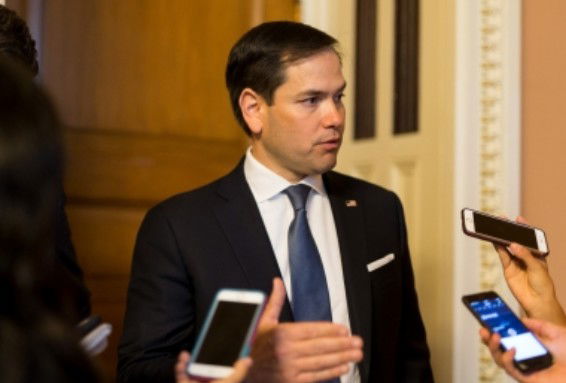
Secretary of State Marco Rubio said the United States is investigating an “incident off the coast of Cuba” after Cuban authorities reported what he called a rare “shootouts on open sea” episode, with Washington seeking independent confirmation of the facts and access to anyone involved who may be US citizens or residents.
“So this morning we were made aware by Cuban authorities of an incident off the coast of Cuba,” Rubio told reporters on Wednesday (local time) in Saint Kitts and Nevis. “We immediately began to look into it.”
He said the Department of Homeland Security, the Coast Guard and other parts of the US government were involved, and that “the majority of the information we still possess is what Cuban authorities are providing both the public and the US Government.”
“We have our embassy on the ground in Havana working this as we speak, asking for access to the people that were on those vessels, if they were American citizens or permanent residents,” he said. Rubio added, “According to the Cuban regime, the boat was registered in Florida. We’re tracking that down.”
Rubio repeatedly declined to draw conclusions before US agencies verify details. “I’m not going to speculate,” he said. “But we’re going to find out exactly what happened here, and then we’ll respond accordingly.”
Asked if there was any US government operation involved, he said: “No, no.” He also said Cuba’s border guard and the US Coast Guard maintain routine contact and that the Cubans alerted the Coast Guard earlier in the day. “We are going to verify that information independently and reach our own conclusions,” he said.
Rubio described the reported circumstances as unusual. “Suffice it to say it is highly unusual to see shootouts on open sea like that,” he said. “It’s something, frankly, that hasn’t happened with Cuba in a very long time.”
He also warned against relying solely on Havana’s account. “We don’t generally make decisions in the United States on the basis of what Cuban authorities are saying,” Rubio said.
In the same remarks, Rubio addressed a US move involving Venezuelan oil sales to Cuba’s private sector for humanitarian reasons. “No, it’s always been legal to sell to the private sector in Cuba,” he said, stressing it would not involve “sales to the government” or “the military-owned GAESA.”
Rubio said Cuba’s private sector “is quite small,” and argued the island’s deeper problems were structural. “The people of Cuba are suffering today,” he said. “They’re suffering now, perhaps more than at any time in recent memory, perhaps in the history since 1959.”
He said the administration would revoke permissions if fuel is diverted. “If we catch the private sector there playing games and diverting it to the regime or to the military company… those licenses will be cancelled,” Rubio said.
Rubio also previewed talks on Iran, saying, “the President was very clear last night that he always prefers diplomacy,” but warned that “Iran poses a very grave threat” and that “these ballistic missiles are a grave threat.”
Cuba and the United States have had decades of strained relations shaped by the US trade embargo and periodic cycles of migration, including boat crossings toward Florida.
US agencies and regional partners have long treated maritime incidents in the Florida Straits as high-risk because they can quickly trigger humanitarian and border-security pressures.
Iran’s nuclear programme has been the subject of years of international diplomacy and sanctions, with US officials repeatedly pressing to curb enrichment and address delivery systems.
Past talks have often faltered over verification, the scope of limits, and whether missile programmes are included.