








America
AAPI Global Health Summit 2026: Women’s Leadership Redefines Medicine and Society
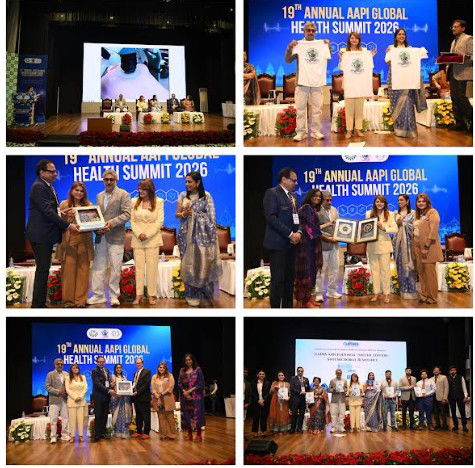
Odisha’s Landmark Women’s Forum Advances Gender Equity, Innovation, and Inclusion
Women are leading the world by being the proponents of empowerment, strengthening educational and professional organizations, and being a powerful voice in almost all fields. They have overcome obstacles and have shown the world what a woman can achieve and contribute to the betterment of the world as never before in human history.
Highlighting the importance of women and their achievements, the final day of the AAPI Global Health Summit (GHS) on January 11th, 2026 in Odisha marked a significant advancement for women’s leadership within medicine and associated fields.
The Women’s Forum, co-chaired by Dr. Kalpalatha Guntupalli and Dr. Tapti Panda, convened a distinguished collective of physicians, public health professionals, scientists, and sports figures to highlight the evolving contributions of women in India’s healthcare sector. The forum’s comprehensive sessions underscored the essential roles of gender equity, representation, and mentorship in promoting global health.
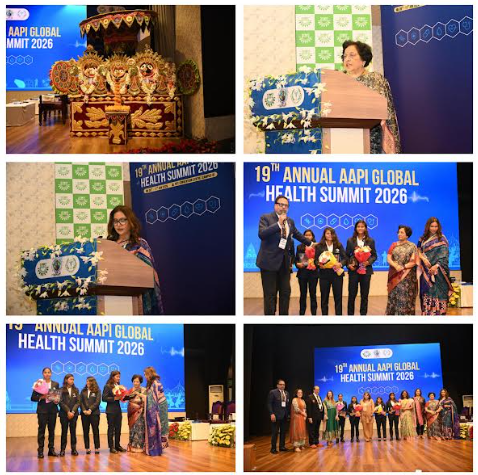
Celebrating Inclusive Sports Innovation and Odia Excellence
Transitioning beyond clinical topics, the afternoon session recognized achievements in resilience, innovation, and inclusion. AAPI President Dr. Amit Chakrabarty honored four visually impaired Odia cricketers—Parbati Marandi, Phula Saren, Jamunarani Tudu, and Basanti Hansada—who recently secured the T20 World Cup title for the visually impaired. Their participation exemplified the summit’s commitment to equity and empowerment.
Dr. Chakrabarty emphasized the transformative role of AI-powered training technologies in enhancing accessibility within sports. “Technology is not merely leveling the playing field—it is expanding it, allowing athletes with visual impairments to compete and excel at the highest levels,” he stated. The athletes’ accomplishments served as compelling illustrations of the impact of innovation and inclusion.
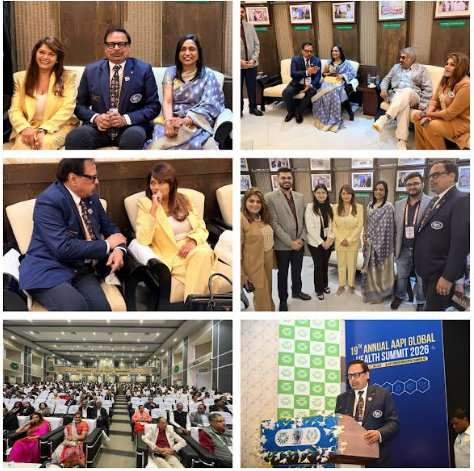
“Women’s Health, Nation’s Wealth”
Chaired by Dr. Tapti Panda, the morning session featured five accomplished women physicians whose presentations collectively affirmed that advancements in women’s health are integral to national progress. Each speaker addressed pressing health issues, offering data-driven perspectives and actionable recommendations.
Dr. Aquinas Edassery commenced the session with an insightful analysis of tribal maternal health in Kalahandi. She emphasized that sustainable improvement requires cultural sensitivity and genuine community engagement, stating, “Maternal health interventions succeed only when they honor the lived realities of the communities they aim to serve.” Her remarks reinforced the necessity for locally tailored public health strategies.
Dr. Sanghamitra Pati presented a precision-health model targeting Sickle Cell Disease, particularly within tribal populations. Her session demonstrated how targeted, evidence-based interventions can significantly enhance public health outcomes. She remarked, “Precision health is not a luxury—it is a necessity for diseases that burden specific populations.”
Dr. Ramya Pinnameni discussed the socio-cultural determinants of anemia, a persistent public health concern in India. She illuminated the effects of gender dynamics, nutritional disparities, and systemic obstacles that perpetuate vulnerability among women. “Anemia is a social condition as much as a medical one. Until we address the inequities that fuel it, progress will remain uneven,” she concluded.
Dr. Divya Kochchar shifted focus to mental health, addressing Imposter Syndrome among healthcare professionals. Her evidence-based guidance on fostering psychological resilience resonated strongly with attendees. She noted, “Women in medicine often carry invisible burdens. Naming them is the first step toward dismantling them.”
Dr. Pushpa Rao concluded the session by advocating for heightened awareness and early detection of APS Type 1, a rare autoimmune disorder. She highlighted the critical importance of multidisciplinary care and timely diagnosis, stating, “Rare diseases demand early recognition—delay is often the greatest threat.”
Collectively, these presentations offered a comprehensive overview of the challenges and opportunities in advancing women’s health leadership in India, emphasizing the intersections of cultural, social, and medical factors.
“Real and the Reel”—Science Meets Cinema
The summit’s concluding session, curated and moderated by Dr. Kalpalatha Guntupalli, bridged science, cinema, and national pride. Entitled “Real and the Reel,” the session celebrated India’s indigenous COVID-19 vaccine through the acclaimed film The Vaccine War. Panelists included Dr. Priya Abraham, former Director of the Indian Institute of Virology and principal scientist behind Covaxin; Mrs. Pallavi Joshi, National Award–winning actress who portrayed Dr. Abraham; and Mr. Vivek Agnihotri, the film’s writer and director.
Mr. Agnihotri described his motivation to depict the story, noting, “Science biopics are rare in Indian cinema. Showcasing the courage and brilliance of women scientists was an opportunity I could not ignore.” Dr. Abraham candidly shared the scientific and emotional complexities her team encountered, from conducting non-human primate trials to countering misinformation. “The journey was filled with highs and lows, but the urgency of the mission kept us focused,” she reflected. Mrs. Joshi discussed the nuances of portraying a living scientist, remarking, “To play a contemporary figure, I had to understand not just her science, but her spirit.”
The session concluded with an interactive audience Q&A and closing remarks from Dr. Chakravarty, reinforcing the forum’s dedication to mentorship, representation, and ongoing systemic support.
A Defining Moment for Global Health
The Women’s Forum at GHS 2026 represented more than a series of events—it served as a celebration of leadership, resilience, and the transformative influence of women across sectors. Spanning public health, sports, and scientific innovation, the forum showcased the pivotal voices shaping India’s future and reinforced a central message: societies thrive when women lead.
On this international stage in Odisha, the AAPI Women’s Forum not only acknowledged key achievements but also fostered dialogue on mentorship, support systems, and the imperative of enhanced representation. As Dr. Guntupalli remarked, “Leadership is about breaking barriers and inspiring change.” The outcomes of the summit are poised to catalyze ongoing progress toward equity and empowerment, both within medicine and throughout society.
In his concluding remarks, Dr. Chakrabarty stated: “May their spirit of courage, love, wisdom, vision, sacrifices and leadership inspire us all to think and reflect about the women who have enriched the personal lives of each of us, and be inspired to make a new beginning in our approach, attitude and beliefs about women and their role in our lives.”


