










America
World Interfaith Harmony Week celebrations in New York
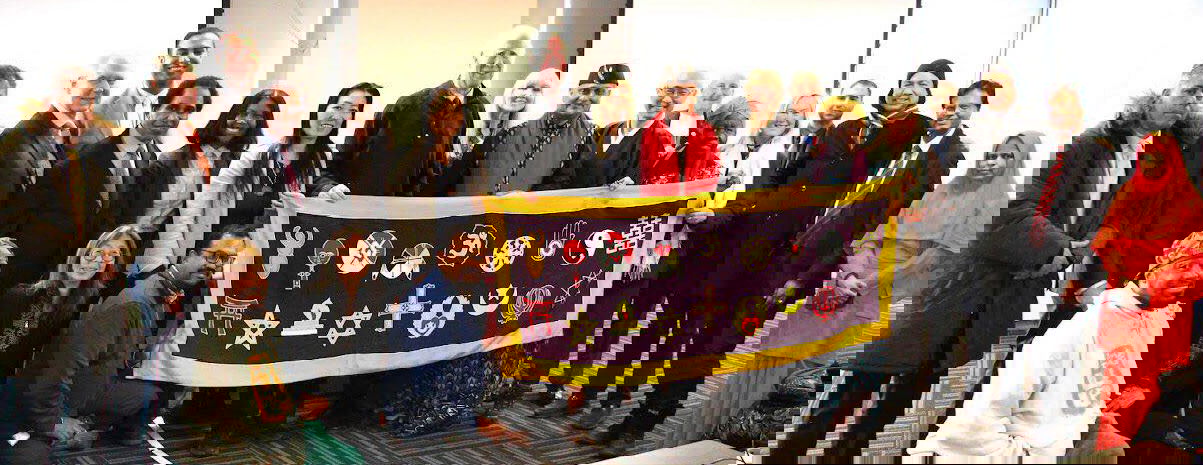
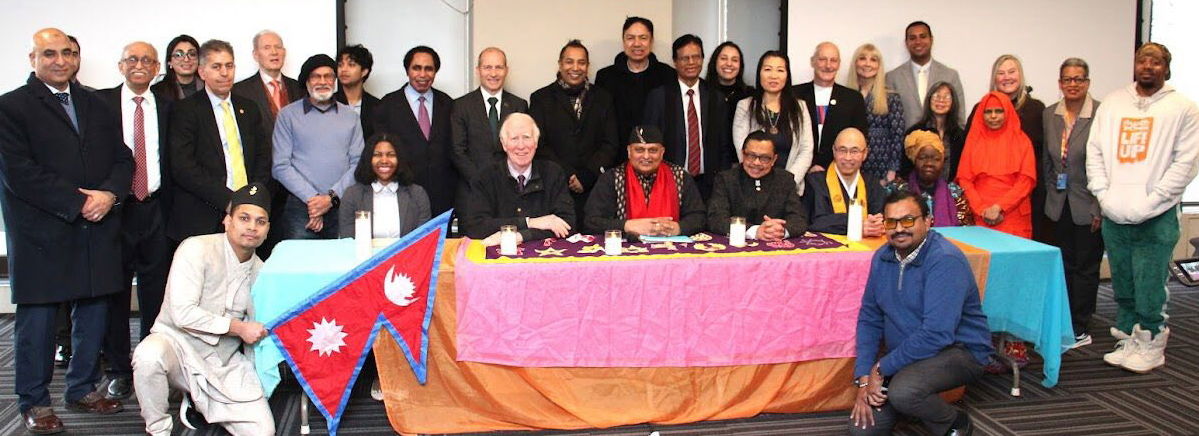
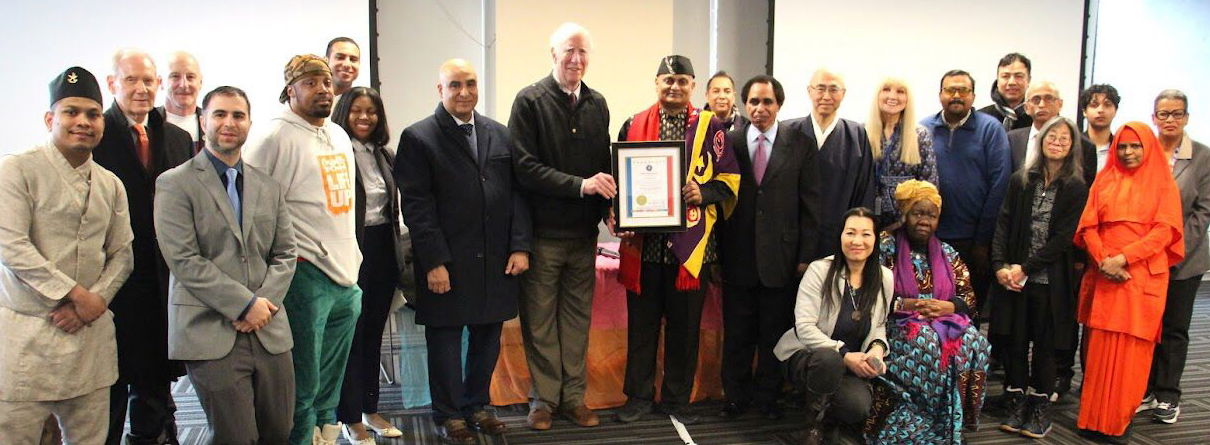
New York: The commemoration of the 29th anniversary of the Ghulja Massacre, a pivotal moment in Uyghur history symbolizing ongoing repression, took place during the World Interfaith Harmony Week celebrations in New York City on Tuesday, February 3, 2026. Held at the Church Center for the United Nations, the event featured an impressive lineup of speakers. Dr. Thomas Walsh, President and Trustee of the HJ International Graduate School for Peace and Public Leadership and former Chairman of the Universal Peace Federation, delivered the keynote address. Among the other notable participants were Imam Dr. Shamsi Ali, President and Founder of the Nusantara Foundation; Ms. Rushan Abbas, Founder and Executive Director of Campaign for Uyghurs; Rev. Dr. T.K. Nakagaki, President and Founder of the Heiwa Peace and Reconciliation Foundation; and Mrs. Amanda Akue, Chief Branch Manager of the HWPL New York Branch.
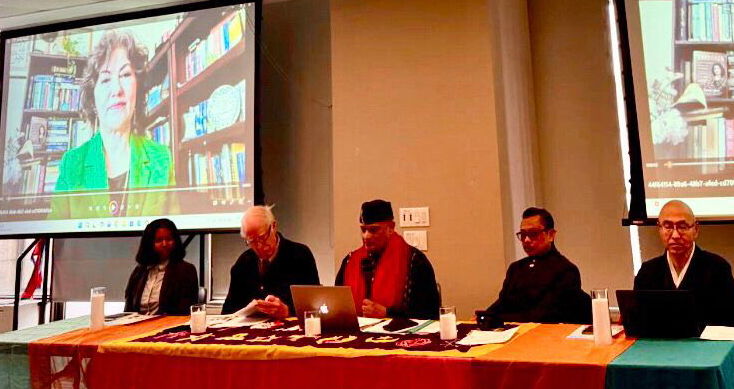
The event was moderated by Guru Dileepji, who led a meaningful dialogue and remembrance of the tragic occurrence.
During his opening remarks, Guruji emphasized the significance of the Ghulja Massacre of February 3-5, 1997, as a crucial reminder of the ongoing struggles faced by the Uyghur people in China. He called for immediate dialogue on their rights and acknowledged the deep trauma within the Uyghur diaspora. Honoring those who lost their lives, he expressed strong solidarity with the community in their fight for fundamental rights and cultural identity.
Participants observed a moment of silent prayer, and guest speakers lit candles in tribute. Guruji declared this anniversary a powerful call to action, urging greater awareness of Uyghur human rights issues and robust international advocacy for justice and cultural preservation.
Ms. Rushan Abbas, Chairperson of the Executive Committee of the World Uyghur Congress, delivered a powerful and compelling speech that commanded attention at the gathering, highlighting the Ghulja Massacre and the ongoing struggles faced by the Uyghur community in China. She vividly recounted the tragic events of February 1997, emphasizing the critical and immediate need for unwavering advocacy for Uyghur rights. Her remarks celebrated the remarkable resilience of the Uyghur people, exemplified by her own family, while firmly asserting the necessity to protect their cultural identity in the face of escalating repression. This repression by Chinese authorities encompasses digital surveillance, informant networks, family coercion, cyberattacks, and physical intimidation. Ms. Abbas issued a determined call to the international community, urging them to stand resolutely against these injustices, including the genocide of Uyghurs in China, and to offer their full support to the Uyghur cause. She advocated for a united front to achieve profound and lasting change and justice.
Imam Dr. Shamsi Ali, President of the Nusantara Foundation, spoke powerfully about the Uyghur crisis, stating that over one million individuals are unjustly held in internment camps, facing forced labor and the suppression of their religious rights. He condemned the destruction of their cultural identities and the horrific physical and mental torture they endure, including mass rape. Additionally, he criticized the separation of children from their parents, who are taken to boarding schools to adopt communist ideology. Imam Ali urged for immediate global awareness and action against these serious human rights violations.
Dr. Thomas Walsh, President of HJ International, delivered a keynote speech addressing the oppressive and Sinicization policies of the Chinese government under President Xi Jinping. He focused on the government's initiative to enforce atheism through state-controlled patriotic religious associations, which suppress various faiths, especially Uyghur Islam. During his talk, Dr. Walsh noted that an anti-cult association specifically targets groups like the Uyghurs, Falun Dafa, and the Church of Almighty God, labeling them as anti-patriotic in China. He stressed the Communist Party’s dominance over religious organizations, including its authority in appointing Catholic bishops.
Dr. Walsh raised alarms about the situation of the Uyghurs in Xinjiang, pointing out the harsh limitations on their cultural and religious expressions, such as the ban on traditional clothing and the forceful requirement to eat during Ramadan. Furthermore, children are prohibited from receiving religious education until they reach 18, which contributes to the erosion of their cultural identity. He concluded by highlighting the oppressive surveillance state in China, which implements a sophisticated and systematic monitoring system that observes all facets of life, exacerbating the repression faced by the Uyghur population.
Rev. Dr. T.K Nakagaki, President of the Heiwa Peace and Reconciliation Foundation pointed out that Dalailama, the Tibetan leader or Taiwanese people can not enter or speak at the United Nations. Mrs. Amanda Akue, Chief Branch Manager of the HWPL New York Branch, emphasized that everyone contributes to building a world of peace, freedom, and love, highlighting the importance of collective action to support communities in need.
In his concluding remarks, Guruji expressed concern for those suffering under the Chinese government's repression, particularly the Uyghur, Tibetan Buddhists, and Turkic Muslim communities. He emphasized that systematic detainment and invasive surveillance threaten individual freedoms and global human rights. Guruji called on the international community to stand in solidarity with these vulnerable groups and demand accountability from the Chinese Communist Party while urging for commemorative events to be transformed into real advocacy and policy change.


