





America
US Supreme Court strikes down race-based affirmative action in college admissions
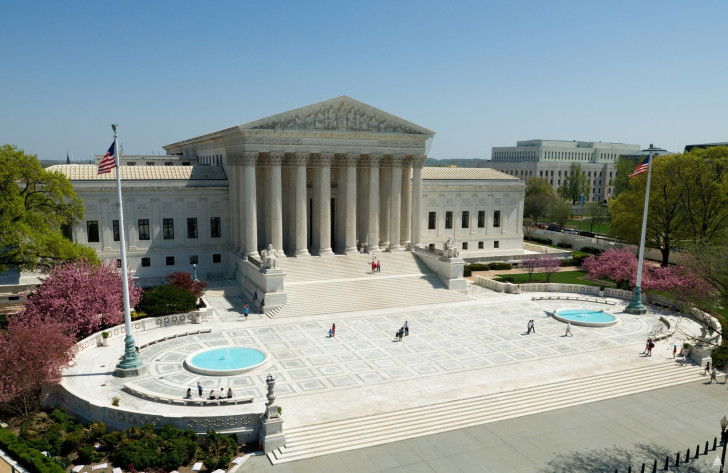
Washington, June 29
In a landmark judgment, the US Supreme Court on Thursday declared race-based affirmative action in college enrollment unconstitutional.
The court held affirmative action violative of the US Constitution’s 14th Amendment, which guarantees equal protection.
All six conservative justices, including Chief Justice John Roberts, ruled to strike down affirmative action, while the three liberals ruled against.
The court’s ruling came in a challenge to the race-based affirmative action by Harvard and University of North Carolina.
“The student must be treated based on his or her experiences as an individual—not on the basis of race,†Chief Justice Roberts wrote in the majority opinion.
“Many universities have for too long done just the opposite. And in doing so, they have concluded, wrongly, that the touchstone of an individual’s identity is not challenges bested, skills built, or lessons learned but the color of their skin. Our constitutional history does not tolerate that choice.â€
Roberts added that the court had previously “permitted race-based admissions only within the confines of narrow restrictions. University programs must comply with strict scrutiny, they may never use race as a stereotype or negative, and -- at some point -- they must endâ€.
Justice Sonia Sotomayor wrote in her dissent note for the minority decision that the ruling “rolls back decades of precedent and momentous progress. It holds that race can no longer be used in a limited way in college admissions to achieve such critical benefitsâ€.
“In so holding, the Court cements a superficial rule of colorblindness as a constitutional principle in an endemically segregated society,†she added.
But the court allowed for colleges to consider race in discussions in the admission process — an applicants can bring up race in their essays and applications forms as a factor in their life, as an impediment or an inspiration.
Roberts wrote that “nothing in this opinion should be construed as prohibiting universities from considering an applicant’s discussion of how race affected his or her life, be it through discrimination, inspiration, or otherwiseâ€.
While the ruling will end affirmative action based on race, universities would be able to switch to using socio-economic factors in the admission process, which could be based on the applicants’ family incomes or residential address.
2 hours ago
World Interfaith Harmony Week celebrations in New York
7 hours ago
FIA’s 43rd Dance Pe Chance Brings 870 Children Together Battling Subzero wind chills
10 hours ago
Greer said US will raise tariffs if no progress made on non-tariff barriers: South Korean FM
17 hours ago
Rishab Shetty says 'life feels better when you hold my hand' on 9 years of marital bliss
17 hours ago
Sidharth Malhotra, Tamannaah Bhatia to shoot special folklore dance sequence for ‘Vvan’ in Mumbai
17 hours ago
Anshula shares a glimpse of sister Sonam Kapoor performing baby shower 'pooja' with husband
17 hours ago
After allegations of illegally entering WB college, Aamir Khan shares heartwarming note for Arijit Singh
17 hours ago
Rahul Gandhi says LS Speaker 'committed' to allow him to speak, Rijiju hits back
17 hours ago
'Would be proud moment': BJP backs Bhagwat’s call to confer Bharat Ratna on Savarkar
17 hours ago
Terror accused Abdul Rahman killed inside Faridabad Jail, Kashmiri inmate arrested
17 hours ago
Kerala HC orders fresh gold testing, vigilance probe into Sabarimala temple case
17 hours ago
Uproar in Rajya Sabha as Oppn MPs raise slogans, seeking to mention LS issues
17 hours ago
Women Cong MPs write to LS Speaker, reject ‘baseless’ allegations of obstructing PM Modi
