Washington, Feb 10
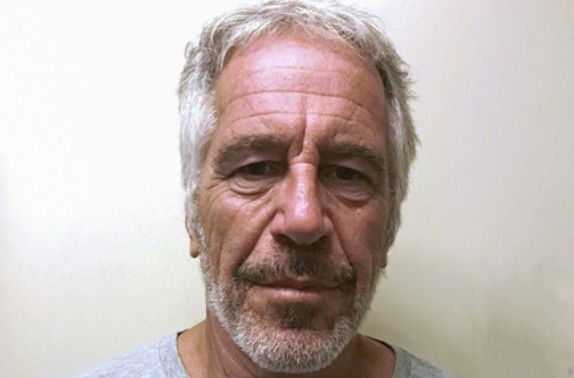
The connections between late sex offender and US financier Jeffrey Epstein and the scientific community were "deeper than previously known" and "unheard of" in extent, according to a recent report by the journal Nature.
Citing newly released documents from the US Department of Justice, the Nature report revealed that Epstein invested millions of US dollars in science projects and "maintained a list of nearly 30 top scientists".
The documents show researchers consulted the sex offender on publications, visas, and public relations crises, and even allowed him deep involvement in their research work, reports Xinhua news agency.
Despite Epstein's initial conviction for sex crimes in 2008, some scientists continued to associate with him and accept his funding. For instance, Epstein donated $800,000 to the Massachusetts Institute of Technology (MIT), a move that eventually led to the resignation of two scientists and the suspension of another.
While mentions of the researchers in the files do not necessarily indicate wrongdoing or involvement in Epstein's criminal activity, the details shed light on how deeply he was involved in the scientific fields he funded, said Nature.
The latest batch of files disclosed new details regarding interactions between Epstein and the scientists. Lawrence Krauss, a theoretical physicist whose science-outreach organisation received $250,000 from Epstein, was advised by the financier via email to offer "no comment" as Krauss responded to media inquiries about an investigation of sexual misconduct that led to Krauss's ousting from Arizona State University in Tempe.
Harvard theoretical physicist Lisa Randall was revealed to have visited Epstein's private island in the Caribbean in 2014 and exchanged emails joking about his house arrest.
In 2013, Nathan Wolfe, then a virologist at Stanford University, proposed that Epstein fund a sexual-behaviour study of undergraduate students to test "our horny virus hypothesis".
One of Epstein's closest academic connections was mathematical biologist Martin Nowak. Nowak, who joined Harvard in 2003, founded the Program for Evolutionary Dynamics (PED) with $6.5 million from Epstein. The financier was not just a donor but deeply involved in the centre, which modelled evolution using mathematics. Harvard closed the PED in 2021 and placed sanctions on Nowak, which were lifted in 2023.
Emails show that Corina Tarnita, now a professor at Princeton University, was in contact with Epstein just six months after his conviction. The PhD student of Nowak sent the financier birthday greetings in 2010 and 2011 and thanked him for his assistance in obtaining a visa.
The documents further revealed that Epstein was deeply involved in the researchers' work.
He regularly discussed science with Nowak and Tarnita, suggesting research topics such as "commercial evolution" and "prelife." In 2010, Nowak even shared page proofs of a paper accepted by Nature with Epstein before its publication, and Epstein provided advice on dealing with criticism of the paper.
The newly revealed details have sparked concern within the academic community. Jesse Kass, a mathematician at the University of California, Santa Cruz, told Nature that it is "unheard of" for a funder to be engaged with actual research on such a level.
"There should be some serious discussion [in academic circles] over what went wrong and how to make that not happen again", in partnerships with private funders, he added.
The US Department of Justice began releasing this latest batch of documents on January 30. Totalling more than 3 million, it is the largest batch of files made public by the US Department of Justice since Congress passed the Epstein Transparency Act late last year.