








America
Paromita Pramanik Leads Worldwide Digital Transformations Implementing Innovative E-Commerce Solutions
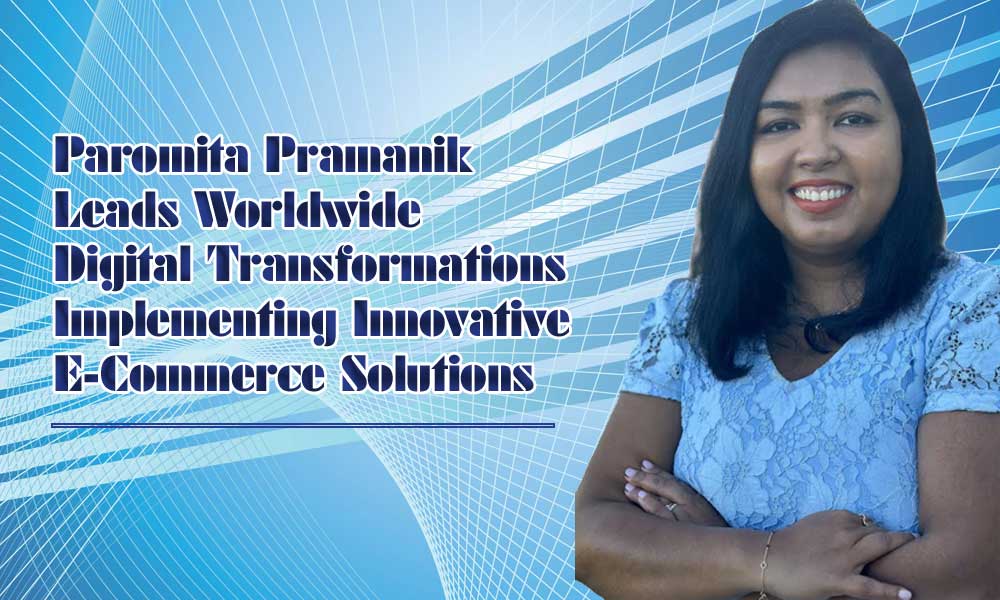
Paromita Pramanik is Senior Product Manager at a global leader in digital transformation. She is known for her expertise in designing technology applications and digital channels to support e-commerce operations, with a focus on business strategy, digital product management, and improving the customer experience. Over the past 14 years, she has achieved significant success as a Senior Product Manager on e-commerce implementation projects for some of the world’s biggest and most recognizable brands, developing innovative solutions for organizations across various sectors including retail, apparel, recreation, banking, insurance, eyewear, hotels, and department stores.
Paromita describes herself as a Product owner as working at the intersection of business and technology to enable organizations to achieve digital transformation. Leading complex projects in Thailand, Italy, and the United States, her experience encompasses leading transformation of multinational clients and helping them plan and achieve their omnichannel vision, through stakeholder management, strategic planning, data and market analysis, business process mapping using agile practices, defining technology specifications, product development, and training the new generation of Product Managers. She drives end-to-end digital transformation strategies with cutting-edge web-based and mobile applications that help companies overcome challenges in business-to-business (B2B) and business-to-consumer (B2C) operations. These platforms often implement e-commerce modules such as Login, Checkout, Payment Gateway, Avalara, Search Engine, Dropship, Wedding Registry, Gift Cards, Ratings & Review, Door-to-Door pickup, Data Privacy Management, leading implementation AI in customer service and more, as well as third-party integrations with a wide array of global e-commerce partners. She also gained expertise in Asset and Wealth Management while working in the banking sector, where she specialized in insurance and investments.
In this interview, Paromita discusses the challenges businesses must overcome to keep pace with rapidly evolving e-commerce domain and consumer expectations, and how she approaches digital transformation to help organizations define and achieve their business goals.
Q: Paromita, let’s start with a brief overview of the industry. How has the e-commerce landscape changed over the last three to five years, and what does it look like now?
A: The e-commerce sector has changed drastically, especially during the Covid-19 pandemic, when businesses of all sizes had to develop e-commerce platforms within a short time to stay in business. This led to an increase of online shopping, as consumers became more comfortable with these e-platforms and digital transactions. Retailers are increasingly adopting omnichannel strategies to provide a seamless shopping experience across online and offline channels. Mobile shopping has surged over the last 10 years, with most consumers using smartphones and tablets for online purchases. Mobile-friendly websites, apps, and payment solutions are now essential for e-commerce success. Generative artificial intelligence (Gen AI) and machine learning (ML) technologies are being used for personalized marketing, product recommendations, and customer service. Chatbots, recommendation engines, and personalized email campaigns are used to make the customer feel special. Social media platforms have integrated e-commerce features which engage users directly through social channels like Instagram and Facebook. Because consumers are increasingly concerned about sustainability and ethical practices, some e-commerce businesses are responding by adopting eco-friendly practices, transparent supply chains, and promoting sustainable products. The rise of digital wallets, cryptocurrencies, and buy-now-pay-later (BNPL) options has diversified payment methods and improved the checkout experience.
Q: Your experience includes leading highly complex technology migrations from outdated legacy systems to newer platforms that offer greatly expanded capabilities, particularly in areas such as retail merchandising, real time inventory and product feed, and order placement, among others. For global brands, executing this type of transformation must involve buy-in and coordination among various stakeholders. How do you facilitate this type of change management, and implement the new platform without shutting down the business?
A: Leading technology migrations, especially from outdated legacy systems to modern platforms, is a complex and high-stakes process. For global brands, the stakes are even higher, requiring meticulous planning, stakeholder coordination, and effective change management, to ensure a smooth transition without disrupting business operations. I usually lead this process by defining the project in multiple phases that include:
1. Current state analysis: document all legacy systems, including their functionalities, integrations, and limitations, engage with stakeholders to understand future business needs, and compare them against the current market trend.
2. Define objectives to set clear goals: outline the objectives of the migration, such as improved efficiency, enhanced capabilities, or cost reduction; establish key performance indicators (KPIs) and success criteria to measure the effectiveness of the new platform.
3. Risk assessment: evaluate potential risks and their impact on the business, including technical challenges and data migration issues, and develop strategies to mitigate identified risks and address potential challenges.
4. Stakeholder buy-in: keep stakeholders informed about the migration process, milestones, and any changes to the plan; establish channels for stakeholders to provide feedback and raise concerns; involve representatives from different departments (i.e. IT, operations, finance, merchandising) to ensure all perspectives are considered.
5. Detailed migration strategy: use a phased approach to migrate in stages, rather than a full cutover; only do minimum viable product (MVP) in Phase-1 and then follow up with go-to features in future phases.
6. Data mapping: map data from legacy systems to the new system for accuracy and consistency in the new platform; verify that all existing integrations and workflows are compatible with the new system.
7. System integrations support: ensure that the new platform integrates seamlessly with other systems and third-party applications.
8. Testing and validation: test data migration thoroughly to ensure data integrity and completeness.
9. Training and support: develop training programs tailored to different user groups, focusing on how the new system meets their specific needs; provide ongoing support and resources, including user manuals, FAQs, and help desks.
10. Performance monitoring: monitor performance against the established KPIs and success criteria.
11. Business continuity backup and contingency plan: ensure that data is backed up regularly to prevent loss in case of issues during the migration; develop contingency plans to address potential disruptions and minimize impact on business operations.
By following this structured approach, you can effectively manage the complexity of migrating from legacy systems to new platforms while maintaining business continuity. The key is to prioritize thorough planning, effective stakeholder engagement, and ongoing support throughout the transition process.
Q: One of your recent accomplishments was leading a joint venture partnership between two leading apparel retailers. This involved working closely with senior business and technical stakeholders, and then designing an integrated platform with processes to manage two million additional product offerings. What were some of the challenges you confronted, and how did you solve them?
A: Working on a high-profile project involves additional sets of challenges and pressure, as the focus of senior stakeholders always remains on the progress of the work. On this type of project, my primary focus is client stakeholder management. In this case, the stakeholders involved two different retail leadership, business, and merchandising teams, plus two IT operations teams, which involved multiple stakeholders from all domains such as catalog, product information management (PIM), dropship, etc.
One of the biggest challenges we faced was adding two million stock keeping units (SKUs) into our current catalog management system and PIM, which were coming from the other retailer via our dropship management system. Our systems were not robust enough to handle this load, so we had to add steps to the workflow and design methods to handle the high quantity of SKUs. This included:
• Accepting the SKUs in batches, posting the content enrichment, and passing them to the catalog management system. The SKUs were selected based on the current market trend to achieve maximum sales revenue.
• Automating this flow so when a certain SKU under a certain category and keyword is received, it would automatically get added to a specific sales catalog.
• To mitigate the potential risks associated with performance and load, due to the high volume, we conducted thorough performance testing on the SKUs added.
• System integration and testing for the multiple new systems added into the architecture as part of this joint venture; this required thorough data mapping to ensure that these new integrations would not break any existing systems. As this venture was a dropship in which the partner was expected to ship the product directly from their warehouse, we had to make sure their inventory aligned with our present inventory management system and was always up to date, eliminating the risk of backorders or having users place orders on out of stock products, which would lead to bad experiences. We also had to revisit our dynamic Estimated Delivery Date (EDD) calculation logic to reflect that the products would be shipped from our partners’ warehouse.
• Finally, because we were working in a “hot” market, we had to develop a robust plan for the high profile joint venture brands that would allow new SKUs to be added within 10 minutes of the match completion.
Q: Has the rapid acceleration of AI and automation tools impacted operational efficiency in the e-commerce domain? Do these new technologies compel businesses to rethink their web and mobile sites and sales strategies?
A: Yes, all retailers must go back to the board and re-think their strategies, to determine how they can optimally use Gen AI to advance and provide a seamless omnichannel experience for their customers. Gen AI is already leading in areas such as search, customer service, warehouse management, etc. It can also be used to deliver a mobile-first, user experience-based optimization. Some of the areas where all retailers must integrate with AI to stay ahead of the game include:
1. Enhanced personalization: AI enables more precise and real-time personalization by analyzing vast amounts of customer data, including browsing habits, purchase history, and preferences; this leads to highly tailored product recommendations and content and marketing messages, improving customer engagement and conversion rates.
2. Efficient customer service: AI-driven chatbots can handle a significant volume of customer inquiries 24/7, resolving issues quickly without human intervention; this not only reduces operational costs, but also enhances customer satisfaction by providing instant support.
3. Improved logistics and delivery: robotics and AI optimize warehouse operations, including picking, packing, and sorting, speeding up the fulfillment process; route optimization algorithms further enhance delivery efficiency, reducing time and costs associated with logistics.
4. User experience (UX) enhancements: As AI becomes integral to the shopping experience, e-commerce platforms need to integrate these technologies seamlessly into their websites and mobile apps; this includes personalized recommendations, predictive search, and dynamic content that adapts to user preferences in real time.
5. Voice search optimization: with the rise of voice-activated assistants (like Amazon's Alexa or Apple's Siri), businesses must optimize their sites for voice search, requiring changes in SEO strategies and content structuring; as consumers increasingly use visual search tools, websites and apps need to incorporate visual search capabilities, allowing users to find products using images rather than text.
6. Mobile optimization: given the shift towards mobile shopping, e-commerce platforms must ensure that their mobile sites and apps are fully optimized for AI-driven features, providing a smooth, responsive, and personalized shopping experience.
7. Data-driven decision making: AI provides deep insights into customer behavior, market trends, and sales performance; businesses can leverage these insights to refine their sales strategies, focusing on targeted campaigns, product offerings, and pricing strategies that align with current demand.
8. Content and marketing automation: AI and automation tools allow for the automation of marketing campaigns, enabling personalized content delivery at scale; this automation ensures that marketing efforts are timely, relevant, and more effective, compelling businesses to reevaluate how they approach customer engagement and sales.
Q: When organizations embark on a digital transformation, what are they typically trying to achieve? Are the drivers financial outcomes, process efficiencies, better user experiences, or some combination? How do you create platforms that deliver measurable business outcomes? What kinds of results have your clients achieved?
A: Organizations pursuing digital transformation generally aim to achieve multiple goals to enhance their overall performance and competitiveness. These often include financial outcomes such as increased revenue, reduced costs, and improved profitability. Automated processes that improve operational efficiency, speed, and accuracy are also a top priority, as these create better user experiences for both customers and employees. Finally, companies embarking on a digital transformation are typically seeking a competitive advantage over other brands in their market. I have previously described many of the steps we employ to achieve these goals. By following the processes I have outlined, my clients have achieved revenue growth, faster time to market, enhanced customer experiences, and improved compliance with critical areas such as data privacy, which builds customer trust.
Q: As a digital transformation specialist, your role must leverage expertise in technology and management consulting. Your engineering degree is in computer science. How did you develop the client-facing and leadership skills to interact with multiple stakeholders and lead IT teams in product development?
A: Developing client-facing and leadership skills, especially in a role that blends technology and management consulting, involves a combination of experience, continuous learning, and deliberate skill-building. Early in my career, while I was working in technology, I had the opportunity to interact directly with business stakeholders and give presentations, in which my strong communication skills and ability to ease technological terms to business users was well received. I also attended communication and presentation skills workshops, and obtained certifications in business, retail, and retail banking domains, which helped me to stay on top of market trends for both technology and business.
While growing in my career, I made it a priority to deeply understand my clients’ businesses and industries. This involved conducting thorough research, engaging in regular discussions with clients, and asking probing questions to uncover their underlying needs and pain points. I also stepped up to take on leadership roles in projects and teams, initially leading small projects or sub-teams, which led to gradually taking on larger responsibilities. This experience was crucial in developing my ability to motivate teams, manage conflicts, and drive results. While doing so, I sought mentorship from experienced leaders and engaged in professional networks and industry groups. These connections provided valuable insights into effective leadership practices and strategies for managing diverse teams.
Managing stakeholder expectations requires good skills in negotiation and diplomacy. I learned this by setting clear expectations, being transparent about project constraints, and finding mutually acceptable solutions to conflicts. Transparency in communication, including regular status updates and feedback sessions, helped in keeping stakeholders informed and engaged throughout the project lifecycle.
To further my technical and management expertise, I participated in professional development courses, certifications, and industry conferences. This ongoing education allowed me to integrate cutting-edge solutions into client projects, and also allowed me to gain experience in various roles within IT and consulting, and helped me understand different perspectives. For instance, working in both technical and business roles provided insights into how technical decisions impact broader business objectives.
Empowering and leading teams starts by fostering a strong and inclusive culture, recognizing team members’ strengths, and encouraging collaboration. Regular team-building activities and open communication channels helped in creating a positive team environment. Learning to delegate effectively and trust team members was essential. This involved setting clear goals, providing guidance when needed, and allowing team members the autonomy to take ownership of their work.
Finally, I honed my project management skills through formal training and practical experience. Using methodologies like Agile and Lean helped in managing complex projects efficiently and adapting to changes. I gained expertise in change management by leading initiatives that required significant organizational changes. This included developing change management plans, addressing resistance, and ensuring smooth transitions. By combining these strategies, I developed the ability to effectively interact with multiple stakeholders, lead IT teams, and drive successful digital transformation projects.


