





America
Mutant Chernobyl wolves develop anti-cancer abilities, may pave way for cure: Study
New York, Feb 9
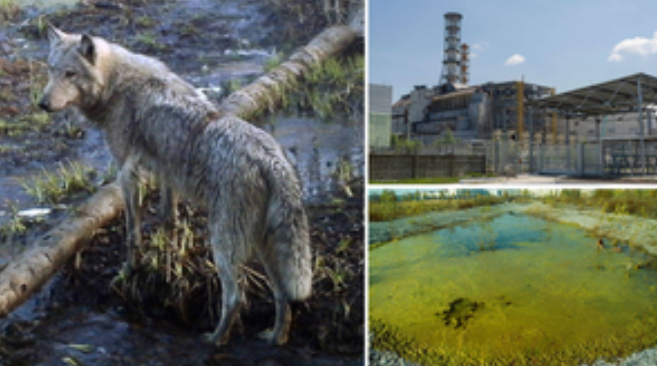
Mutant wolves around Chernobyl, where the world’s worst nuclear accident took place 35 years ago, has now developed anti-cancer abilities, an advance that may open door for cure against the deadly disease, according to a study.
In 1986, a nuclear reactor at the Chernobyl power plant exploded, releasing cancer-causing radiation and irradiated debris into the environment.
The Chernobyl Exclusion Zone (CEZ), a 1,000 square mile zone surrounding area, cordoned off to prevent further exposure to radiation, has been recolonised by wildlife like horses, wolves, forests, and fungi.
Now, researchers at the Princeton University in the US are studying how the wolves of Chernobyl survive and thrive despite generations of exposure and the accumulation of radioactive particles in their bodies.
The team led by Cara Love, an evolutionary biologist and ecotoxicologist in Shane Campbell-Staton’s lab at Princeton in 2014 went to the CEZ, radio-collared wolves, and took blood to understand the wolves’ responses to cancer-causing radiation.
Using these specialty GPS collars armed with radiation dosimeters, “we get real time measurements of where they are and how much (radiation) they are exposed to,” said Love.
They discovered that Chernobyl wolves were exposed to upwards of 11.28 millirem of radiation everyday for their entire lives, over six times the legal safety limit for the average human worker.
Unlike wolves living exclusively outside the CEZ, Love found that Chernobyl wolves have altered immune systems, similar to cancer patients undergoing radiation treatment. And most promising, she has identified specific regions of the wolf genome that seem resilient to increased cancer risk.
Most human research has found mutations increasing cancer risk (like BRCA does with breast cancer), but Love's work hopes to identify protective mutations that increase the odds of surviving cancer.
Tragically, Covid-19 and ongoing war in the region have prevented Love and her collaborators from returning to the CEZ since.
“Our priority is for people and collaborators there to be as safe as possible,” she said. Love presented the findings at the Annual Meeting of Society of Integrative and Comparative Biology’s Annual Meeting in Seattle, Washington in January.
4 minutes ago
Telangana Police's 'Dial-112 call centre' handled over 500 emergency calls during Medaram Jatara
5 minutes ago
We celebrate 50 years of watch over our waters: Indian Coast Guard chief
6 minutes ago
A powerful step towards developed India: CM Devendra Fadnavis on Union Budget
7 minutes ago
YSRCP seeks Centre’s intervention over 'political violence' in Andhra
8 minutes ago
NASA’s Perseverance Rover completes 1st AI-planned drive on Mars
13 minutes ago
Budget 2026-27 rolls out customs duty relief to boost manufacturing, exports
16 minutes ago
Nagaland CM launches digitisation of old birth, death records to boost citizen services
17 minutes ago
Budget 2026: Sitharaman proposes 5 medical hubs, 3 new All India Institute for Ayurveda
18 minutes ago
Healthcare gets booster shot with Rs 10,000 crore for Bio Pharma Shakti in Budget 2026-27
19 minutes ago
Budget 2026: Govt waives custom duty on cancer and rare diseases drugs, to build NIMHANS-2
21 minutes ago
Ireland qualify for the 2026 Women’s T20 World Cup
46 minutes ago
Delhi Dangal Warriors to face Haryana Thunders in blockbuster PWL 2026 final
47 minutes ago
Tilak to play warm-up matches, Sunder looking good, Suryakumar Yadav gives update ahead of T20 WC
