




Business
Microsoft unveils 2 custom-designed chips to drive AI innovations
San Francisco, Nov 16
Heating up the AI race, Microsoft has unveiled two in-house, custom-designed chips and integrated systems that can be used to train large language models.
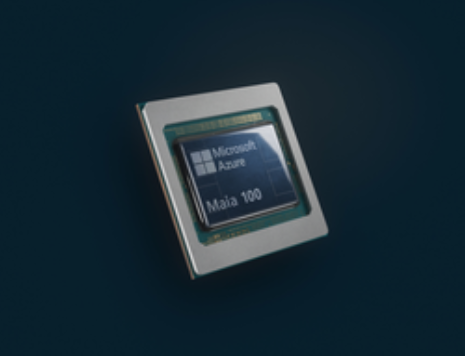
The Microsoft Azure Maia AI Accelerator is optimised for artificial intelligence (AI) tasks and generative AI, and the Microsoft Azure Cobalt CPU, an Arm-based processor, is tailored to run general purpose compute workloads on the Microsoft Cloud.
The chips will start to roll out early next year to Microsoft’s data centres, initially powering the company’s services such as Microsoft Copilot or Azure OpenAI Service,†the company said at its ‘Microsoft Ignite’ event late on Wednesday.
“Microsoft is building the infrastructure to support AI innovation, and we are reimagining every aspect of our data centres to meet the needs of our customers,†said Scott Guthrie, executive vice president of Microsoft’s Cloud + AI Group.
Microsoft sees the addition of homegrown chips as a way to ensure every element is tailored for Microsoft cloud and AI workloads.
The end goal is an Azure hardware system that offers maximum flexibility and can also be optimized for power, performance, sustainability or cost, said Rani Borkar, corporate vice president for Azure Hardware Systems and Infrastructure (AHSI).
“Software is our core strength, but frankly, we are a systems company. At Microsoft we are co-designing and optimising hardware and software together so that one plus one is greater than two,†Borkar said.
“We have visibility into the entire stack, and silicon is just one of the ingredients,†she added.
At Microsoft Ignite, the company also announced the general availability of one of those key ingredients: Azure Boost, a system that makes storage and networking faster by taking those processes off the host servers onto purpose-built hardware and software.
To complement its custom silicon efforts, Microsoft also announced it is expanding industry partnerships to provide more infrastructure options for customers.
By adding first party silicon to a growing ecosystem of chips and hardware from industry partners, Microsoft will be able to offer more choice in price and performance for its customers, Borkar said.
Additionally, OpenAI has provided feedback on Azure Maia and Microsoft’s deep insights into how OpenAI’s workloads run on infrastructure tailored for its large language models is helping inform future Microsoft designs.
“Since first partnering with Microsoft, we’ve collaborated to co-design Azure’s AI infrastructure at every layer for our models and unprecedented training needs,†said Sam Altman, CEO of OpenAI.
“Azure’s end-to-end AI architecture, now optimized down to the silicon with Maia, paves the way for training more capable models and making those models cheaper for our customers,†Altman added.
5 hours ago
Anti-India hate surges online amid immigration debate in US: Report
5 hours ago
Iran's new Supreme Leader vows revenge, says Strait of Hormuz will remain closed
7 hours ago
EAM Jaishankar and Indonesian counterpart discuss West Asia conflict, bilateral ties
7 hours ago
West Asia conflict: Gulf producers cut output by 10 million BPD as Hormuz traffic stalls, says report
12 hours ago
Energy security compromised due to flawed foreign policy; govt must prepare: Rahul Gandhi
12 hours ago
Air India seeks DGCA nod to relax flight duty norms amid geopolitical tensions
12 hours ago
Divyanka Tripathi shares her relationship rule for hubby Vivek Dahiya
12 hours ago
Ranveer Singh-starrer ‘Dhurandhar’ to re-releases in cinemas a week ahead of release of 2nd part of the franchise
12 hours ago
Nasser tells Telugu actor Rajendra Prasad: Tender an apology from your heart!
12 hours ago
Genelia D’Souza reminds all the mothers out there: Focus on progress not perfection
13 hours ago
Indian sailor killed in Iran attack on US-owned oil tanker, 15 crew members evacuated
13 hours ago
Rajendra Vishwanath Arlekar sworn in as Acting Governor of Tamil Nadu
13 hours ago
Opposition claims LPG shortage; ruling alliance MPs assure there is no need to panic
